Filipino Food!
Many will claim Filipino Food to be the worst cuisine in all of Se Asia. But there is much more to know about this cuisine, where it came from and how it evolved.
FOOD
Randy Landis
2/12/20263 min read
The "Worst" Food In Asia?
That "worst" label is a controversial and often misunderstood reputation that usually stems from a mismatch between expectations and reality. If you go into a Filipino meal expecting the aromatic herbs of Vietnam or the fiery heat of Thailand, you might be disappointed—but that's because Filipino food is playing an entirely different game.
Here is why Filipino cuisine is often unfairly criticized, along with the "real story" behind the flavors.
1. The "Ugly Delicious" Problem (Presentation)
Many Southeast Asian cuisines (like Thai or Indonesian) are incredibly photogenic, featuring bright greens, reds, and yellows. Filipino food, by contrast, is often monochromatic.
The Critique: Critics call it "brown" or "mushy."
The Reality: Many of the best Filipino dishes are slow-cooked stews (like Adobo, Caldereta, or Kare-Kare). In culinary terms, these are "braises," where the goal is deep, developed flavor rather than visual "pop." It’s comfort food, not "spa food."
2. A Different Flavor Pillar: Sour over Spicy
Most of Southeast Asia leans heavily on the "Spicy-Salty-Sweet" trio. The Philippines, however, is the master of Sour.
The Critique: Travelers expecting chili-heat find the food "bland" or "vinegary."
The Reality: The Filipino palate prizes asim (sourness) as a refreshing counterpoint to the tropical heat. Whether it’s the tamarind base of Sinigang or the citrusy zing of Calamansi, the cuisine uses acidity to "cut" through fat and cleanse the palate.
3. The "Fiesta Food" vs. "Everyday Food" Gap
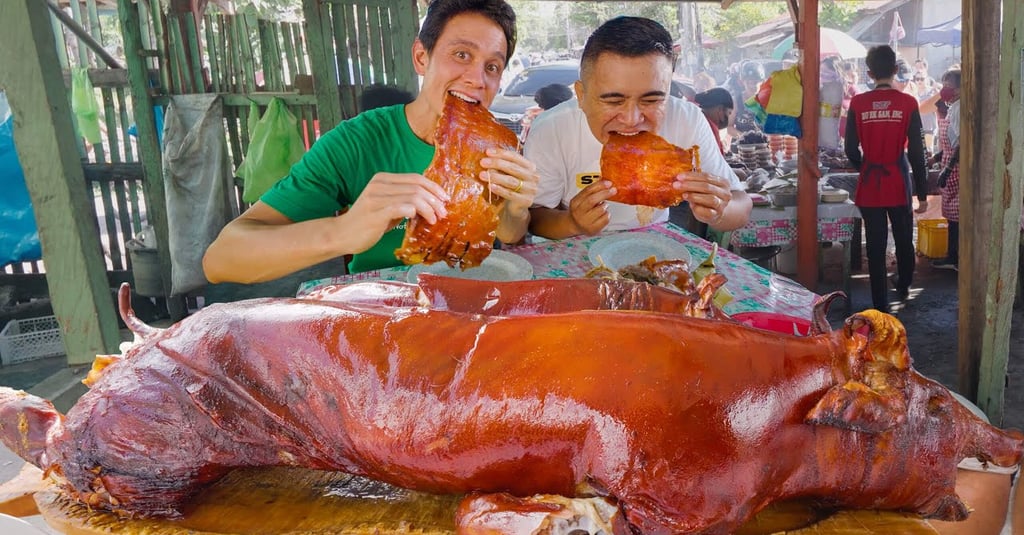
What most foreigners see in restaurants or at parties is "Fiesta Food" - heavy, fried, and meat-centric (like Lechon or Crispy Pata).
The Critique: It's often labeled as "oily," "salty," and "unhealthy" compared to the light, veggie-heavy diets of neighboring countries.
The Reality: Traditional, home-cooked Filipino food is actually very vegetable-forward. Dishes like Pinakbet (steamed veggies with shrimp paste) or Ginataang (vegetables in coconut milk) are daily staples that don't always make it onto the menus of flashy restaurants abroad.
4. Colonial Confusion
Because of 300 years of Spanish rule and 50 years of American influence, the Philippines has dishes like "Spaghetti" (which is sweet and has hot dogs) or "Burgers."
The Critique: People claim it "lacks an identity" or is just "bad fusion."
The Reality: This is actually "indigenization." Filipinos took foreign concepts and adapted them to local tastes and available ingredients. It’s a resilient, "fusion" cuisine that existed long before fusion was a trend.
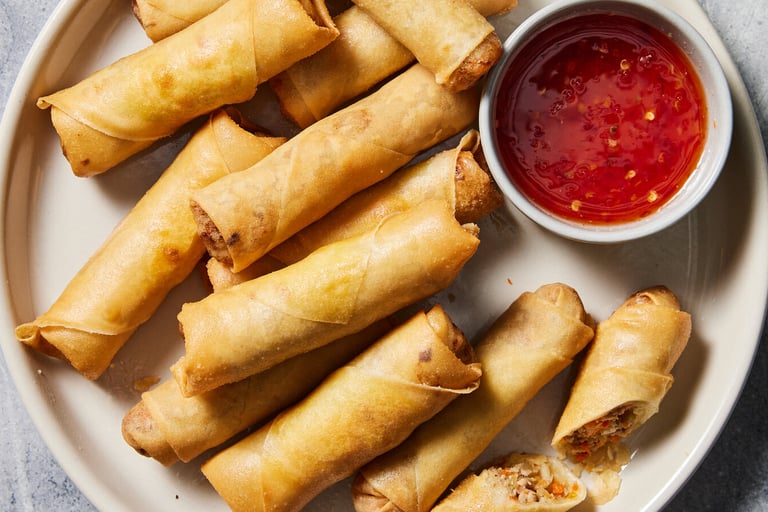
Good Filipino Lumpia is hard to beat!
Summary: It's a Palate Shift
Feature Thai/Vietnamese Filipino
Primary Kick Chili / Heat Vinegar / Sour
Aromatics Lemongrass, Mint, Basil Garlic, Onion, Ginger
Staple Fat Coconut Milk / Light Oils Pork Fat / Coconut Milk
Vibe Fresh & Fragrant Savory & Soulful
The "worst" label usually comes from people judging a stew-based culture by the standards of a salad-based culture. Filipino food is often called the world’s first "fusion" cuisine. Because of its location as a trading hub and its long colonial history, a huge portion of the Filipino pantry is actually "indigenized" versions of foreign dishes.
Chinese traders (mostly Hokkien) arrived long before Western colonizers. They brought noodles and soy products that are now inseparable from Filipino identity. Some of these dishes include Pancit, Lumpia, Siopao & Siomai, and Arroz Caldo.
Spanish rule lasted over 300 years, leaving a deep mark on celebratory dishes. Interestingly, many "Spanish" dishes in the Philippines are richer and meatier than their European counterparts, such as Lechon, Adobo, Paella / Arroz Valenciana, Mechado, Caldereta, and Afritada.
The Mexican Connection. For centuries, the Philippines was governed by Spain through Mexico (via the Manila-Acapulco Galleon Trade). This brought many "New World" ingredients that people assume are native and include foods like Champorado and Tamales. Then without Mexico, Filipino food wouldn't have Chilies, Tomatoes, Corn, Potatoes, Cacao, or Avocado. Even the word Sayote comes from the Mexican Chayote.
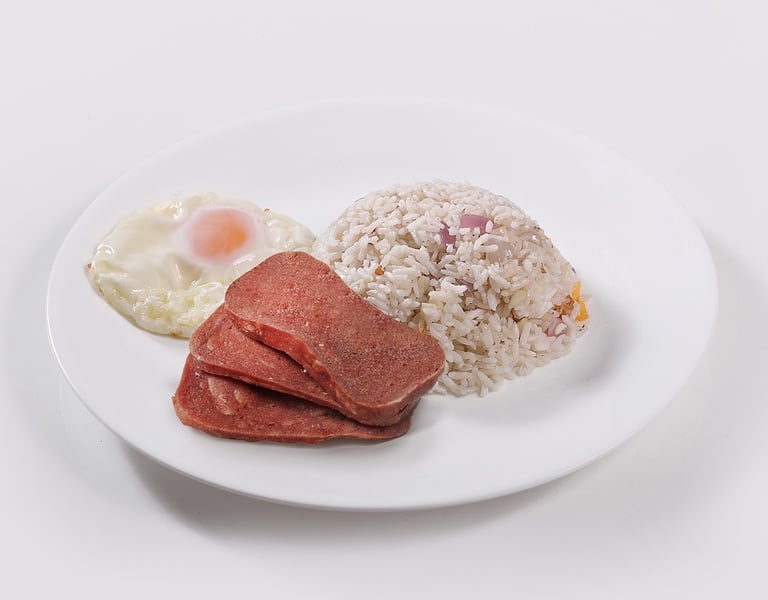
The American Influence. Last but not least, the "modern palate" evolved from the American colonial period (1898–1946) and introduced industrialization and "convenience" to the Filipino kitchen. Without America's contribution, there would likely be no Spam & Corned Beef, Filipino Spaghetti, Banana Ketchup, Hot Dogs and Fried Chicken.
It's imporant to note that canned meats became
prestigious during and after WWII and led to the
"silog" breakfast culture today (e.g., Spamsilog).
For what it is worth, I have my favorites but it all
comes down to quality ingredients. Unfortunately
Filipinos tend to cut corners on food preparation
and is maily based on budgetary constraints. I can
say though that Filipino food cooked abroad tends
to be richer and heartier than what is prepared in
the Philippines. Nonetheless, it can still be a bit on
the sweet and fatty side of things.
Spam-Silog - not the most appealing breakfast!
Discover why Asian foods are more appealing than Filipino Food Here!