Know Before You Go! #1
Part 1 of 2 Parts - "Know Before You Go" offering a macro-glimpse into the country, people, culture, and going there to live. A must read for anyone considering moving to the Philippines!
PHILIPPINES
11/2/20259 min read
First!... This is Southeast Asia!
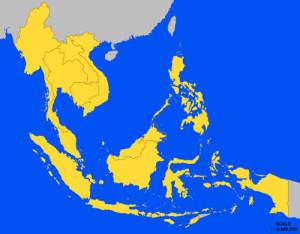
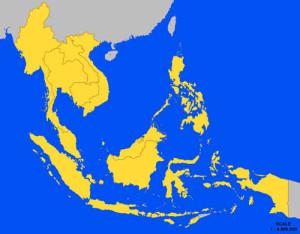
If you are thinking of moving to the Philippines, the first thing to know that this is Southeast Asia. Anyone contemplating a move abroad, especially to a developing country, should do their due diligence with research. One should completely understand the country/city/province/area they plan on moving to. Thoroughly! And after that, they need to research some more. The very reason I say this is simple. Unless you were raised in the part of the world that you contemplate moving to, there will be profound and incomparable differences in most all aspects of everyday life. From Geography to climate to culture and food, if you are not prepared to accept all the differences and nuances, you will not readily adapt to life there. Wherever it is you choose to settle!
Generally speaking, the Philippines has had much external influence to its culture over the last few centuries and is probably the most westernized of all Asian countries. Nonetheless, living here will still be in stark contrast to the western country you are coming from. When a westerner visits the Philippines, the cultural differences are very noticeable, and they seem subtle enough. But when one settles here, those subtle differences take on an importance from an entirely different perspective.
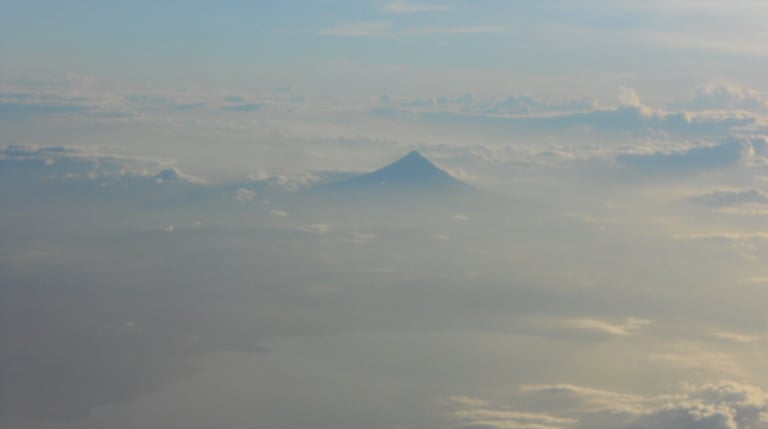
Mt. Mayon, active volcano
About
The Philippines is a volcanic archipelago made up of 7,641 islands and lies mostly within the inter-tropical convergence zone (ITCZ) of the Western Pacific. "Typhoon Alley" to be more specific. Typhoons, monsoons, landslides, earthquakes, and volcanic eruptions are all possible here and make this country ripe for natural disasters. Almost every year you can count on a disaster of some proportion occurring somewhere in the country. The archipelago consists of 36,289 kilometers (22,549 mi) of coastline making it the 5th longest coastline in the world. Most of the mountainous islands are covered in tropical rainforest and the islands are home to a diverse range of birds, plants, animals, and sea creatures. It is one of the ten most biologically mega-diverse countries in the world and is at or near the top countries in terms of biodiversity. If you like mountains, whitewater rivers, waterfalls, jungles and rainforests, caves, beautiful beaches and ocean related activities, you will enjoy what this country has to offer in adventure and natural beauty. Before we left the U.S., a friend asked "Why would you want to move to a country that has super typhoons, floods, monsoon rains, landslides, earthquakes, tsunami's, and 50 volcanoes, 23 which are considered active?" I replied "To get away from these darned tornadoes!"
Climate.
The tropical climate of the Philippines can be very oppressive and can drive many foreigners back to the mid latitudes after just a couple of seasons. While it is quite sultry across the archipelago, there are micro-climates across the islands that determine stark differences in annual rainfall patterns and amounts. Typhoons are more prevalent across the middle and northern Philippines and monsoon rains can affect all areas. Mountain living can provide some relief from the heat. Heat?... absolutely! Copious amounts of rainfall?... Yes! Humidity?... Cut it with a knife YES! The weather should play an important role in determining if you can and, where you should settle. Think living in Orlando or Houston in the summer without air conditioning!
Economic.
The Philippines economy has shown steady growth recently, recovering from pandemic-related declines. In 2024, GDP growth was around 5–6%, driven by strong consumer spending, remittances from overseas workers, and investments. Inflation has been a challenge, but it has started to stabilize. The government is focusing on infrastructure and digitalization to boost long-term growth. However, risks remain due to global economic uncertainties and climate-related disruptions.
Employment outlook? The outlook for foreigner jobs in the Philippines is mixed. The government prioritizes jobs for locals, so work permits for foreigners are generally limited to positions where local expertise is scarce. Foreigners however, can find opportunities in specialized fields such as IT, business process outsourcing (BPO), education (especially English teaching), and executive roles in multinational companies. Demand for foreign expertise in tech, engineering, and finance is steady, but competition and strict regulations remain. Overall, opportunities exist but are mainly in niche or high-skill sectors, with regulatory hurdles to consider.
Culture.
The culture of the Philippines is reflective of the country's complex history. It is basically a Malayo-Polynesian culture with observable ingrained influences from Spain, China, Japan, Korea, India, and the West (specifically the United States). Because of a lengthy U.S. occupation and influence, English is widely spoken here. Generally speaking though, the farther you venture into the remote provincial areas, English-speaking becomes less prevalent and can eventually become almost non-existent. The official language of the Philippines is Tagalog and is just one of 8 major speaking dialects in the country, and is among 175(+/-) dialects in all. These include major languages like Tagalog, Cebuano, Ilocano, Hiligaynon, and Waray, as well as many regional and local dialects. Most are part of the Austronesian language family. Some dialects are widely spoken, while others are limited to small communities. Filipino (based on Tagalog) and English are the official languages.
The Philippines is predominantly a Roman Catholic country with approximately 80% of the population practicing Catholicism with 10% involved in other Christian denominations, 5-6% practicing Muslims and 2% take to other religions (Buddhism, Hinduism, indigenous beliefs). The sociocultural way of life here is very family oriented and heavily religious.
People and Societal Status.
Despite steady long-term economic growth, the Philippines still struggles with poverty. While there has been progress in reducing poverty rates over the years, a significant portion of the population remains below the poverty line, especially in rural and remote areas. Economic growth has helped, but challenges such as unemployment, underemployment, and unequal access to education and healthcare persist. The government continues to implement programs to address these issues, but poverty remains a major concern.
Although middle-class growth here over the last decade is obvious, the gap between the "haves and have-nots" is seemingly becoming wider. Because poverty restricts access to quality education due to costs, lack of resources, or the need for children to work, this creates a cycle where poverty and limited education reinforce each other.
Living here, you will deal with outstretched hands and open sewers. There is much noise, pollution, and trash everywhere. There will be communications issues, crowded venues, some pushing and shoving, scammers, hustlers, etc. Animal cruelty is excessive here. If you have a weak stomach, this is not the place for you. In correct political speak, this is a developing country, but in reality, it is still third world in much of the country.
Specifically Speaking.
If you're feeling comfortable with a decision to move to the Philippines, you should begin your research on where you will settle, based upon your lifestyle preferences. This includes your desires, wants and needs (not necessarily in that order). Of course, if you have already met someone or have a partner, it she will most likely be the one who decides on where you will live.
While I blog about our own personal experiences, it might sound like we lead a glorious life in utopia. But know this... "You never really understand a person until you walk a mile in their shoes." No two individuals are alike and therefore cannot have the same desires, likes, tastes, and needs (except maybe in whiskey, cigars, sports cars, and women). Individual experiences of life in the Philippines are rarely described from the same perspective.
I have been accused many times over the years as someone who is "Living the life" but nobody could possibly know this to be factually true. We live a comfortable life and that's all that matters to us. Someone else might feel differently and everybody has their own set of life's expectations - no two sets of requirements can be exactly alike. The similarities of needing a devoted and loving partner, good and abundant food, and a solid roof over one's head end there.
Timeline.
When will you retire? When will you be moving? Or, are you ready to move now? When is the best time of the year to arrive there? When is the cheapest time to travel? If you haven't planned this out well in advance... I'd say you're not ready. You DO need a solid plan and you should take your time and plan accordingly. Unneeded assets should be liquidated and saving money should be part of the plan. A good plan is a long plan and is executed over time. But you should always set short-term and intermediate-term goals with the objective of achieving your long-term goal.
DO NOT drink a lot of beer on Friday night, recover on Saturday, buy tickets to Manila on Sunday and fly out on Monday. That is simply a tragedy going to happen - and it happens more often than not.
Partner?
Do you have a significant partner already in the Philippines? Will she be living with you? Is she your girlfriend or your wife? How long have you known her? Are you getting married as soon as you get off the plane? If you answered yes to that last question (and even if you've dated online for 2 years), I refer you back to the previous paragraph. Dating and marriage to a Filipina is an entirely different subject and is probably worthy of its own blog site, but that in itself requires good planning. Marriage in the Philippines is not something that should not be rushed into.
If you are coming here with the intention of finding a life partner well, that will be the easiest goal of all to achieve (you should do plenty of research though in this area also) and near the end of this article, I will provide both caution and simple advice on the subject of the "Significant Other" and how they can affect your chosen settlement location. So keep reading!
Immigration.
How do you plan to immigrate to the Philippines? The visa process in the Philippines offers perhaps more options and flexibility than most other countries. Many expats come to live here on a tourist visa and will convert their status later, if and when it becomes more advantageous. Before boarding a plane for the Philippines, you will most likely be required to have a return or outbound ticket. As an arriving tourist, you will typically receive a visa upon arrival valid for 30 days, for most nationalities. It can often be extended in 29-day increments, up to a maximum of 36 months depending on nationality. Extensions are obtained by applying at the BI. Extensions require payment of additional fees. Always check the latest requirements, as rules can change.
Because I am married to a Filipina, I first obtained my 13A Visa from a stateside Philippines Consulate before we departed and then applied for and received my permanent resident (ACR-I Card) once we arrived. I could write about some of the different options here but because immigration requirements tend to be somewhat fluid and information can become easily outdated, I recommend visiting the Philippines Bureau of Immigration (BI) site for the most up to date information.
Bottom Line.
You will need a dependable source of income to live here. And don't count on finding a job when you get here! The outlook for foreigner jobs in the Philippines is mixed. While the government prioritizes jobs for locals, work permits for foreigners are generally limited to positions where local expertise is scarce. Foreigners can find opportunities in specialized fields such as IT, business process outsourcing (BPO), education (especially English teaching), and executive roles in multinational companies. Demand for foreign expertise in tech, engineering, and finance is steady, but competition and strict regulations remain.
How much income will I need? That is not a black or white question - the answer has everything to do with your lifestyle choices and how you wish to live. Go native and you could get by on an income of $700-$800 per month. Throw in a few amenities and western conveniences, then $1600 might get you by. Want to live a more western lifestyle? Then $2,500+ per month is what you will need. Throw a girlfriend, wife, family, and/or car into the mix, you're gonna need more money! And it all hinges on the strength of currency exchange rates.
There are no one-shoe-fits-all answers to these types of questions. You must make your own assessment of your own wants & needs, and then begin doing the homework.
(Originally Published in 2014 - revised 2026)
----------------------------------------------------------------------------------------------------------------------------------
Part TWO covers: Housing, Health, Communications, Transportation, Entertainment & Food!