Family Disaster in the Philippines (Update)
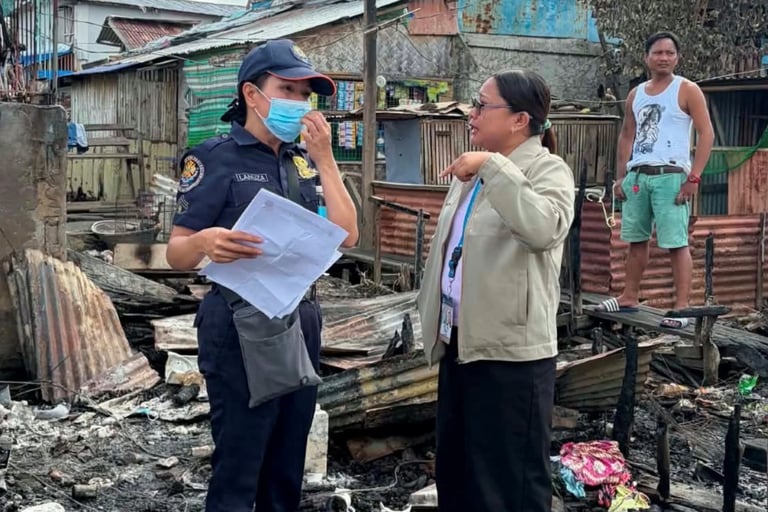
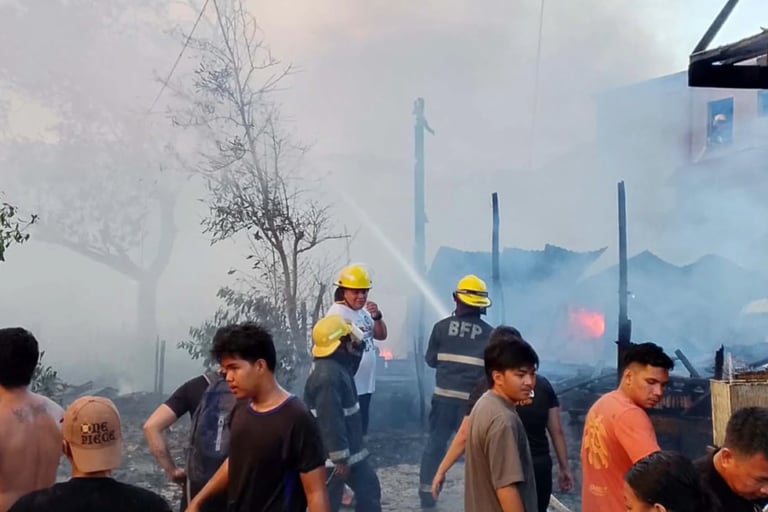
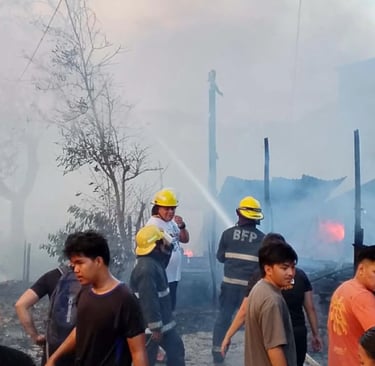
Last month (May 2026), my wife's family experienced a Family disaster in the Philippines that destryoed 29 homes in Calbayog CIty, Samar - four of them homes belonging to family members.
PHILIPPINES
6/10/20264 min read
Family Disaster Update in the Philippines
To all of our YouTube subscribers and viewers, our Patreon members, social media followers, and website visitors: If you are familiar with the recent fire in Calbayog City, Samar that displaced my wife's sister and her extended family, here is an update. You can watch that video HERE.
First, we would like to thank all the generous and thoughtful people who contributed to our efforts to help the family. You have been more than gracious. We collected a total of $1,425 usd in donations, in addition to the personal funds Teri and I and other family members in Calbayog City provided to the displaced members of the family. These funds have been extremely helpful with immediate recovery in replacing everything from clothing and daily necessities, school supplies, to new school uniforms for the children. Some of the money has been set aside to help offset rebuilding their homes. Her family is deeply touched and incredibly grateful for the kindness of strangers.
The Local Government Is Helping
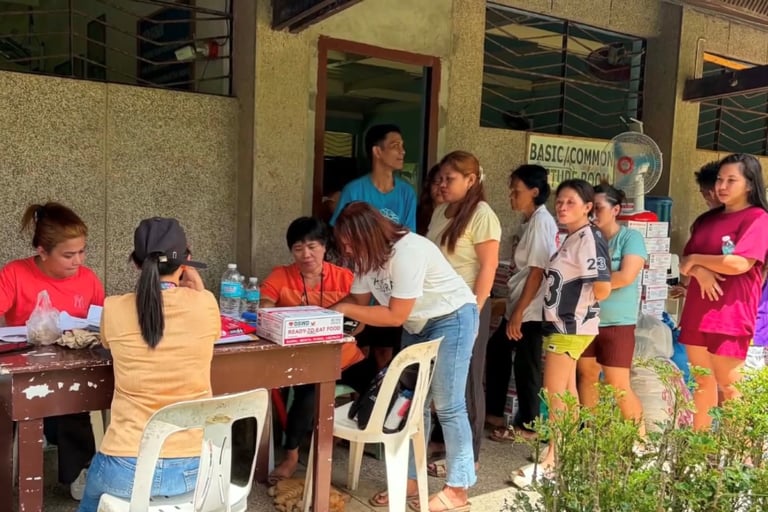
All affected family members are currently being sheltered by the local government - with the exception of Teri's elder sister who found some space in her grandchildren's home, but she returns to the shelter each day for daily food rations and to be with her family.
In addition to government-funded shelter and food, cash contributions from the Local Government Unit (LGU) amounted to ₱20,000 ($327) to each head of the 29 destroyed households, to be used towards resettlement costs. In addition, several local politicians have also contributed to the Disaster Assistance Family Access Fund, which can be drawn upon as needed. In this disaster, each household is credited with ₱15,000 ($245) on their account, to be used strictly for building materials in the reconstruction effort.
How Disaster Relief Works in the Philippines.
Disaster relief money in the Philippines is managed through a tiered, proactive system where 5% of all national and local government budgets is mandatorily allocated for disaster risk management. Funds are released through pre-arranged national appropriations and international aid, to facilitate immediate rescue, shelter, and financial assistance. By law, every LGU and national agency must set aside at least 5% of their total revenue for their respective Local and National Disaster Risk Reduction and Management Funds.
Pre-Disaster: Part of this funding is set aside for proactive measures, such as anticipatory action frameworks, which empower authorities to deploy aid based on everything from weather forecasts and risk assessments before a storm or hazard hits.
Quick Response Fund (QRF): This serves as a built-in standby fund that agencies like the Department of Social Welfare and Development (DSWD) or the Department of Public Works (DPW) can tap immediately for relief and recovery.
To unlock Frontline Agencies and Emergency Aid: Once a disaster strikes, several primary agencies are responsible for executing the relief money. A declaration allows governments to access and utilize their reserved calamity funds, implement price freezes on basic necessities or issue emergency loans.
In the case of a localized disaster, such as a fire in an informal housing area, DSWD leads the distribution of direct, unconditional cash assistance via programs like the Emergency Cash Transfer (ECT). The allocation and distribution of funds bypasses long-term national planning to trigger an immediate, localized emergency pipeline and can take the form of cash payouts and the distribution of family food packs and non-food items, like those mentioned above.
Bureaucratic Hurdles
But before any money is released, local frontline workers must officially log the displaced individuals. At the Barangay Level, Barangay officials (the smallest local government units) immediately set up a physical registration desk at the evacuation site. Social workers use the Disaster Response Operations Monitoring and Information Center (DROMIC) system to register affected families. Every affected family is tagged and issued a Disaster Assistance Family Access Card (DAFAC). This card serves as their primary identity check to receive cash, food, and building materials, preventing fraud or double-dipping.
The Philippines is considered to be more proactive, utilizing a centralized, cash-forward strategy built for high-frequency typhoons and natural disasters. Direct relief focuses on baseline survival and immediate local marketplace recovery. Emergency Cash Transfers (ECT) typically range between ₱5,000 to ₱11,000 ($85 to $190 USD) depending on whether a house is partially or totally destroyed. But in the case of the Calbayog City fire, ₱20,000 was granted.
The United States by comparison is more reactive, relying on a decentralized, insurance-integrated network optimized for high-value infrastructure recovery. The financial limits are vastly higher but strictly restricted by asset validation. For major disasters, FEMA can award up to $43,600 for housing assistance and an additional $43,600 for other needs assistance to uninsured or underinsured citizens. And as Westerners, every major asset we own is generally insured, we seem to be much better taken care of... but we as taxpayers and insured foot the bill.
In closing, it's a shame to think that more money came from outside the Philippines than from within for this family disaster, and might just prove a point: how poor Filipinos are viewed as a status class, and how the real money flows in the Philippines.